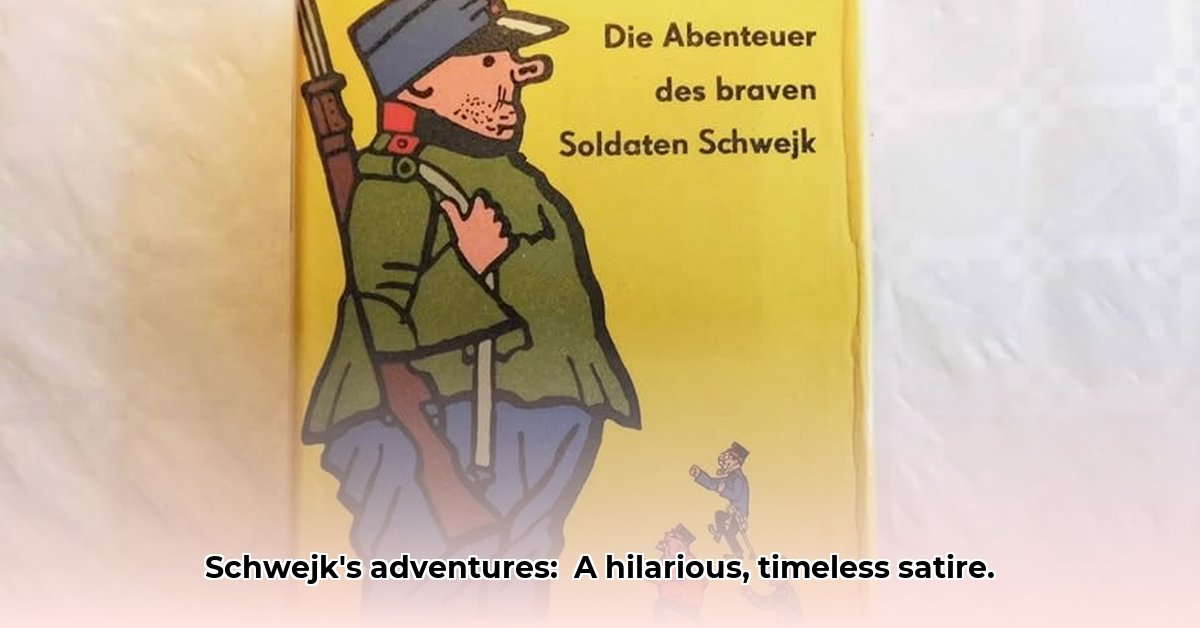
Jaroslav Hašek's Die Abenteuer Des Braven Soldaten Schwejk (The Adventures of the Good Soldier Švejk) isn't just a war novel; it's a masterful satire, a poignant social commentary, and a surprisingly funny exploration of the human condition. Its enduring appeal lies in its relatable characters, its sharp wit, and its timeless critique of power, bureaucracy, and the absurdity of war. This isn't your oupa's war story – it's a cheekily subversive commentary that remains strikingly relevant today.
Švejk: The Simpleton Who Outwits the System
Švejk, our seemingly simple-minded protagonist, is anything but. His portrayal as a lovable oaf cleverly masks a cunning mind, a master of passive resistance. His feigned naiveté is a brilliant shield, protecting a sharp intellect that effortlessly navigates the absurd world around him. He's a quiet rebel, using his "clumsiness" to cleverly subvert authority. Think of him as a mischievous chess grandmaster, moving with the surgical precision of a seasoned strategist. His unwavering observation skills allow him to outsmart the obstacles placed in his path, making him a symbol of quiet defiance. Isn't it fascinating how such seemingly simple actions can yield such impactful results? His journey, filled with comical mishaps, becomes a testament to the indomitable human spirit’s endurance in the face of absurdity.
The Absurdity of War and the Inefficiency of Bureaucracy
Hašek's genius lies in his sharp satirical lens. He doesn't just poke fun at war; he dissects the entire rotten system. The novel ruthlessly exposes the inefficiency, cruelty, and utter pointlessness of the Austro-Hungarian war machine. The bureaucracy itself becomes a character – a monstrous entity, choked by endless paperwork, nonsensical rules, and pointless procedures that crush the human spirit. Picture mountains of forms, bewildering regulations, and meetings that lead absolutely nowhere. Have you ever felt the frustration of overly complex systems? Hašek's satire is a timeless warning against the dangers of mindless bureaucracy. The humour cleverly acts as a buffer, allowing us to confront these unpleasant truths with a dose of laughter. Don’t you find this satirical approach both insightful and engaging?
A Crumbling Empire: Historical Context and Literary Style
Die Abenteuer Des Braven Soldaten Schwejk isn't just a funny story; it's an important historical document. Set against the backdrop of World War I and the decaying Austro-Hungarian Empire, the novel vividly captures the chaos and disillusionment of a world on the brink of collapse. Hašek skillfully employs the varied dialects of the empire's diverse population, painting a rich and complex picture of a multicultural society teetering on the verge of disintegration. This masterful use of language adds depth and authenticity to the narrative, offering a unique glimpse into the social and political realities of that era. Is it not incredible how the author weaves in such intricate details to elevate the reader's understanding of the historical period?
Did Hašek intend for his novel to transcend a simple critique of the Austro-Hungarian military? Many scholars argue that the book represents a broader condemnation of war and blind obedience to authority. Ongoing research continues to reveal the complexities of Hašek's intent and the lasting impact of his work.
Švejk's Enduring Legacy: Laughter and Resistance
Why does Die Abenteuer Des Braven Soldaten Schwejk remain so immensely popular today? Because, sadly, human nature hasn't changed much. The struggle against incompetent leadership, bureaucratic nightmares, and blind obedience to authority remains profoundly relevant. Hašek's work is a testament to the resilience of the human spirit and its ability to find humour even in the darkest of times. Its enduring appeal lies precisely in its ability to use humour as a powerful tool, simultaneously exposing flaws and forging a sense of shared experience. Isn’t it remarkable how a century-old novel can still stir such profound emotions and discussions? The book reminds us that even in the face of absurdity, the spirit of resistance persists.
The Ripple Effect: Past, Present and Future
Švejk's impact extends far beyond the pages of the novel, inspiring countless artists, filmmakers, and writers. Its continued popularity underscores its timeless message on war's absurdity, the perils of unchecked power, and the importance of critical thinking. It's a living testament to the power of satire – a powerful catalyst for social change and literary excellence.